
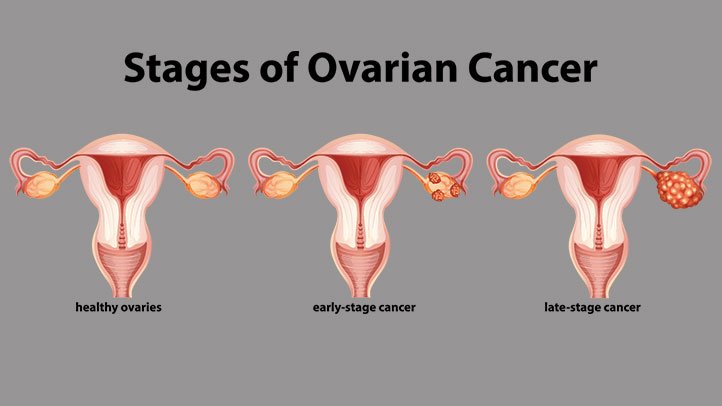
There is no real known way to prevent ovarian cancer for sure; however, there are certain things that may help to significantly reduce the risks of being diagnosed with the disease. For example:
1. When a woman has taken the anti-contraceptive pill for more than 10-years, then the chances of being diagnosed with ovarian cancer drops significantly.
2. Tubal ligation, where the fallopian tubes are surgically tied to close them, has been known for many years to cut down the risks of developing the disease.
3. It is believed that the complete removal of one, or both of the fallopian tubes (salpingectomy, tubectomy) also cuts down the risks (a more recent practice).
4. Removal of the ovaries also cuts down the risks of getting ovarian cancer; however, it does increase the chances of being diagnosed with heart disease.
The removal of the ovaries is not usually considered as the best option for many women; however, it is used under certain circumstances where there may be a genetic or family history risk, although not usually when the patient is over 60 years.
Removal of the ovaries is a practice that has recently changed, as recent studies now indicate that the removal of even postmenopausal ovaries may cause more harm than good, as most ovarian cancer actually comes from the fallopian tubes.
Although this new evidence may indicate that removing the fallopian tubes completely would prevent the disease, it is not the case. As primary peritoneal cancer, can in many cases actually arise from the pelvis after ovary removal.
Where there are genetic abnormalities (BRCA or Lynch Syndrome [mutation]), or the risk from family history of ovarian cancer, then exceptions may well be considered, where both the fallopian tubes and the ovaries may be removed.
When genetic abnormalities are present, the risks of being diagnosed with ovarian cancer are extremely high, making the risk of being diagnosed with heart disease less of an issue, although it is still a serious consideration.
However, should a hysterectomy be considered for whatever reason, the removal of the fallopian tubes would almost certainly be recommended. There is some doubt as to where the removal of the ovaries would actually be beneficial as well.
It is not just a good idea, but it is also highly recommended that any woman concerned with the possibility that they may be at risk from developing ovarian cancer, speak with either their doctor, or a genetic counselor for advice.
Related articles
 Health
Learn About Malaria From A Medic Perspective
Malaria is a potentially life-threatening disease caused by a parasite that is transmitted to humans through the bites of infected mosquitoes. The pathophysiology of malaria involves a complex interaction between
Read article Health
Radiotherapy: A Key Medical Procedure in Cancer Treatment
Radiotherapy, also known as radiation therapy, is a crucial medical procedure widely used in the treatment of various types of cancer. This article provides an overview of radiotherapy, its applications,
Read article Health
Incision and Drainage: An Essential Procedure in Cancer Patient Care
Incision and drainage (I&D) is a medical procedure commonly used in the treatment of cancer patients when dealing with abscesses or localized infections. This article provides an overview of the
Read article